
All About Naming Ceremonies
Plan a Naming Ceremony
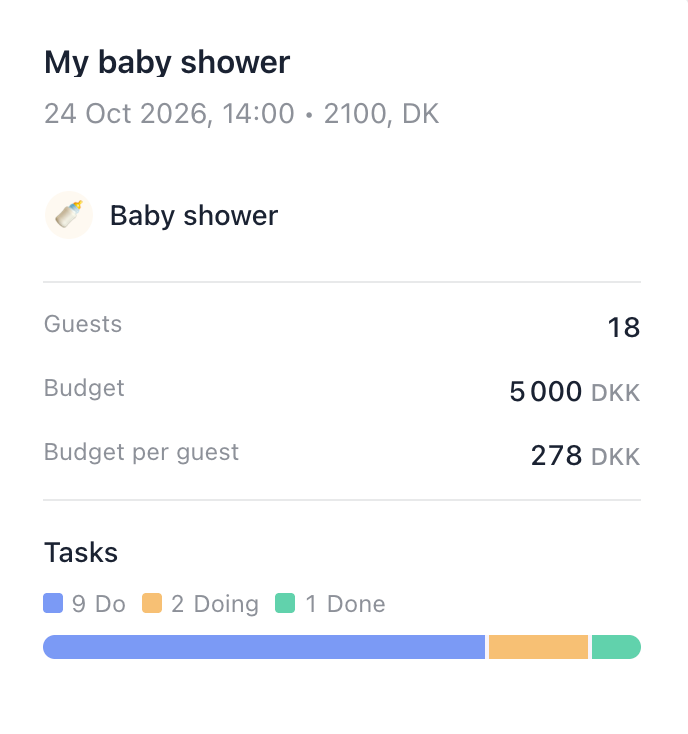
Create your guest list, checklist and budget in one place. Create your guest list, checklist and budget in one place
- ALL DETAILS IN ONE PLACE
- Guests, tasks and budget in one place
- EASY INVITATIONS
- Invite guests and share updates
- STAY ON TOP OF TASKS
- Track of tasks and key steps
How to plan a Naming Ceremony
A Naming Ceremony is flexible, but most follow the same structure. You define the meaning, then plan the practical details around it.
- 01
Define the role of the ceremony
A Naming Ceremony is often used as a non-religious alternative to a baptism. Decide what the day should represent and how formal you want it to be.
- 02
Choose a celebrant or host
Some ceremonies are led by a professional celebrant. Others are hosted by a parent, friend or family member. This person guides the ceremony and keeps the flow.
- 03
Select guideparents or mentors
Instead of godparents, many choose guideparents. Their role is symbolic and personal. Decide who to include and how they take part in the ceremony.
- 04
Plan the ceremony content
Most Naming Ceremonies include a welcome, the naming itself, and a few personal elements. This can be readings, music or short speeches.
- 05
Pick a meaningful location
Many host at home, in a garden or at a rented venue. The location should support the tone of the ceremony and the number of guests.
- 06
Invite your guests
Start with close family and friends. A Naming Ceremony is often more personal than larger traditional events.
- 07
Plan a simple celebration after
It is common to follow the ceremony with food and drinks. This can be anything from coffee and cake to a full lunch.
- 08
Set a budget and keep it simple
There are no fixed expectations. Most costs come from food, drinks and location. Keep it aligned with the type of event you want.
Get premade todo lists for your upcoming Naming Ceremony
Save time and plan confidently with Forlods.
Guide
Plan the ceremony step by step
A Naming Ceremony follows a simple structure. Keep it short and easy for guests to follow.
- Welcome and introduction
- Host or celebrant opens the ceremony
- The naming moment
- Present your child’s name
- Readings and personal elements
- Add readings, music or short speeches
- Guideparents or mentors
- Introduce guideparents
- Closing the ceremony
- Close the ceremony and transition guests
- Celebrate with your guests
- Continue with food and drinks
What to know before planning a Naming Ceremony
A Naming Ceremony is simple and flexible, but a few early decisions make planning easier. Define the format, choose who leads the ceremony and keep the setup manageable from the start.
A Naming Ceremony has no strict rules. You decide the structure, tone and level of formality. Some keep it short and informal, while others plan a more structured ceremony with a clear flow.
Most Naming Ceremonies are used as a non-religious alternative to a baptism. Religious elements are often replaced with personal readings, music, symbolic rituals or short statements from parents and guideparents.
The ceremony is usually led by a parent, a friend or a professional celebrant. This person guides the ceremony and keeps the timing on track.
Many families include guideparents instead of godparents. Their role is symbolic and can be defined by you, or left out entirely.
Naming Ceremonies often include personal elements such as readings, music or short speeches. Keep it simple and choose what feels relevant for your event.
Most ceremonies are followed by a small gathering with food and drinks. The setup can be simple, and often takes place at home or in a casual venue.
Start planning your Naming Ceremony
Use Forlods to create and manage your todos and event details without juggling messages, notes, and spreadsheets.
Plan your Naming Ceremony timeline
A Naming Ceremony is usually planned around your family, your guests and the type of day you want to create. There is no fixed date, so the timeline is less about tradition and more about giving yourself enough time to shape the ceremony and plan the celebration.
Many families start planning once life feels a bit more settled. This is often when you decide whether the ceremony should be small and informal or built around a larger gathering. Some also time it with a first birthday or another family milestone.
Set a date and choose a location. Naming ceremonies can be held at home, in a garden, in a hall, or somewhere else that feels right for your family. If you want a celebrant, this is also the right time to check availability.
Start shaping the ceremony itself. Decide who will speak, whether you want guideparents, and what you want to include beyond the naming. This could be readings, music, promises, a certificate signing, or a symbolic ritual.
Send invitations and confirm the guest list. At this stage, you can also finalise the flow of the day and decide what happens after the ceremony, whether that is coffee and cake, lunch, or a larger celebration.
Review the ceremony from start to finish. Confirm readings, music, promises and any practical details with the people involved. Keep the structure simple and easy to follow on the day.
Focus on the welcome, the naming itself and the people around you. Most naming ceremonies work best when the structure is clear, personal and not too long.